Z-Buffer & Depth Testing
From triangles always painting over each other to correct depth ordering.
The problem
With the basic rasterizer working, the next problem is obvious: what happens when two triangles overlap? Without any depth system, the last one drawn always ends up on top — regardless of whether it's actually behind the other one in 3D space. That's wrong.
What is a z-buffer
The z-buffer is a second array the same size as the framebuffer, but instead of storing colors, it stores the depth of the closest pixel drawn so far. Before painting a pixel, we compare its depth to what's already in the buffer. If it's closer, we paint and update. If not, we skip it.
std::vector<float> zbuffer(WIDTH * HEIGHT, HUGE_VALF);
// HUGE_VALF = positive infinity — initially "nothing has been drawn"
The per-pixel test:
// Depth test — only paint if this pixel is closer than what's already there
if (depth < zbuffer[j * WIDTH + i]) {
    zbuffer[j * WIDTH + i] = depth; // update stored depth
    framebuffer[j * WIDTH + i] = color; // paint pixel
} else {
    continue; // skip — something closer is already in front
}
Interpolating depth
The depth of each pixel is interpolated across the triangle using barycentric coordinates — just like color. But there's an important catch: you can't interpolate z directly. After perspective projection, z is no longer linear in screen space — points far away are compressed, so a straight interpolation would give the wrong depth. This will make more sense when UV mapping is covered, since the same distortion affects texture coordinates.
What is linear in screen space is 1/w — the inverse of each vertex's original depth (how far it is from the camera, before any projection). Interpolating 1/w and then inverting gives the correct depth:
// w1, w2, w3 = original depth of each vertex (distance from camera)
float depth = e1_norm*(1/w3) + e2_norm*(1/w1) + e3_norm*(1/w2);
depth = 1/depth; // invert back to get the real interpolated depth
Bugs
−w instead of w — the original depth of the vertex, negated. All depth comparisons had the wrong sign.
+w — the positive original depth. Closer objects have smaller w, so a < comparison correctly picks the nearest one.
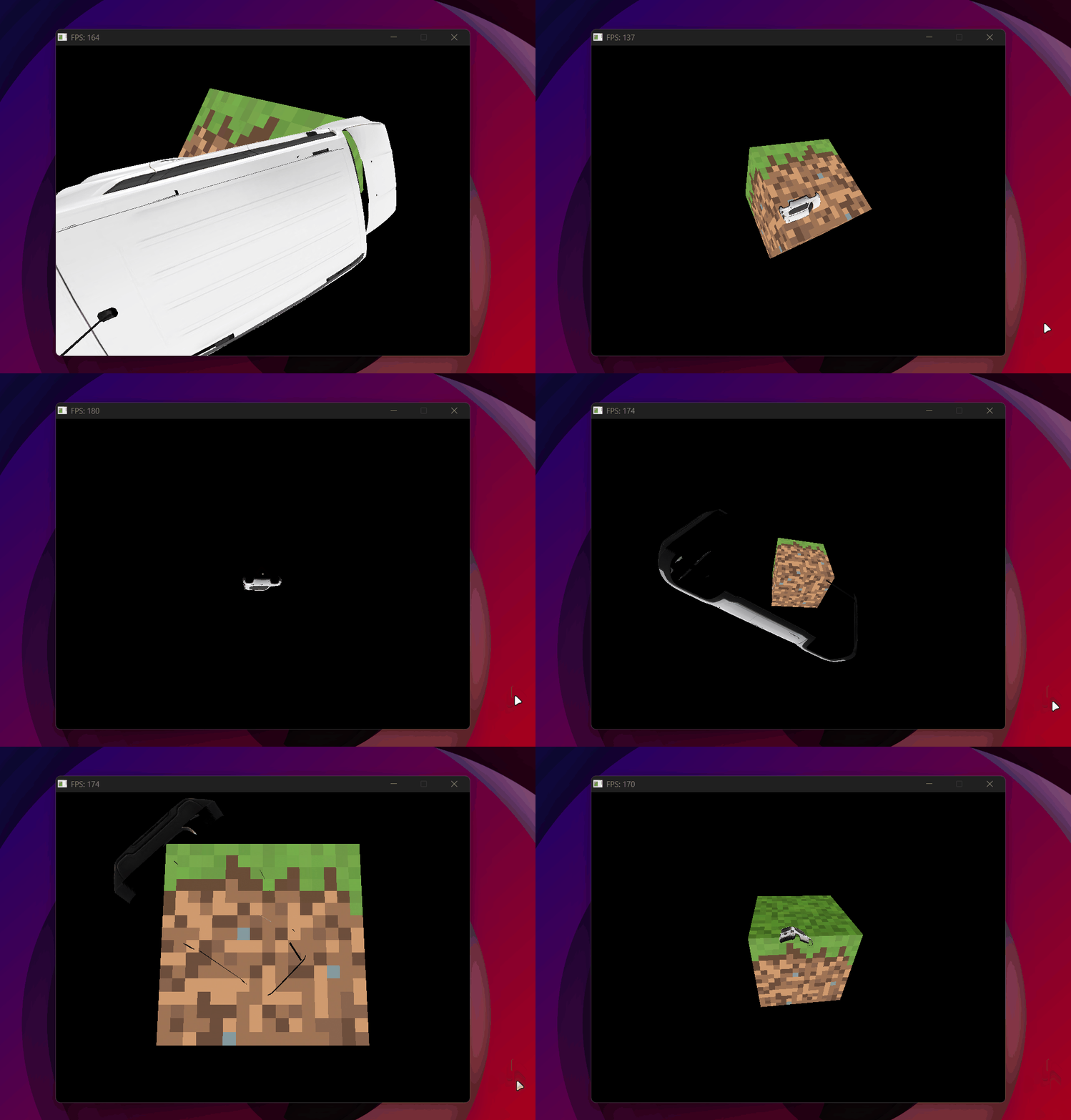
Two objects, one always on top regardless of distance — separate z-buffers don't see each other.
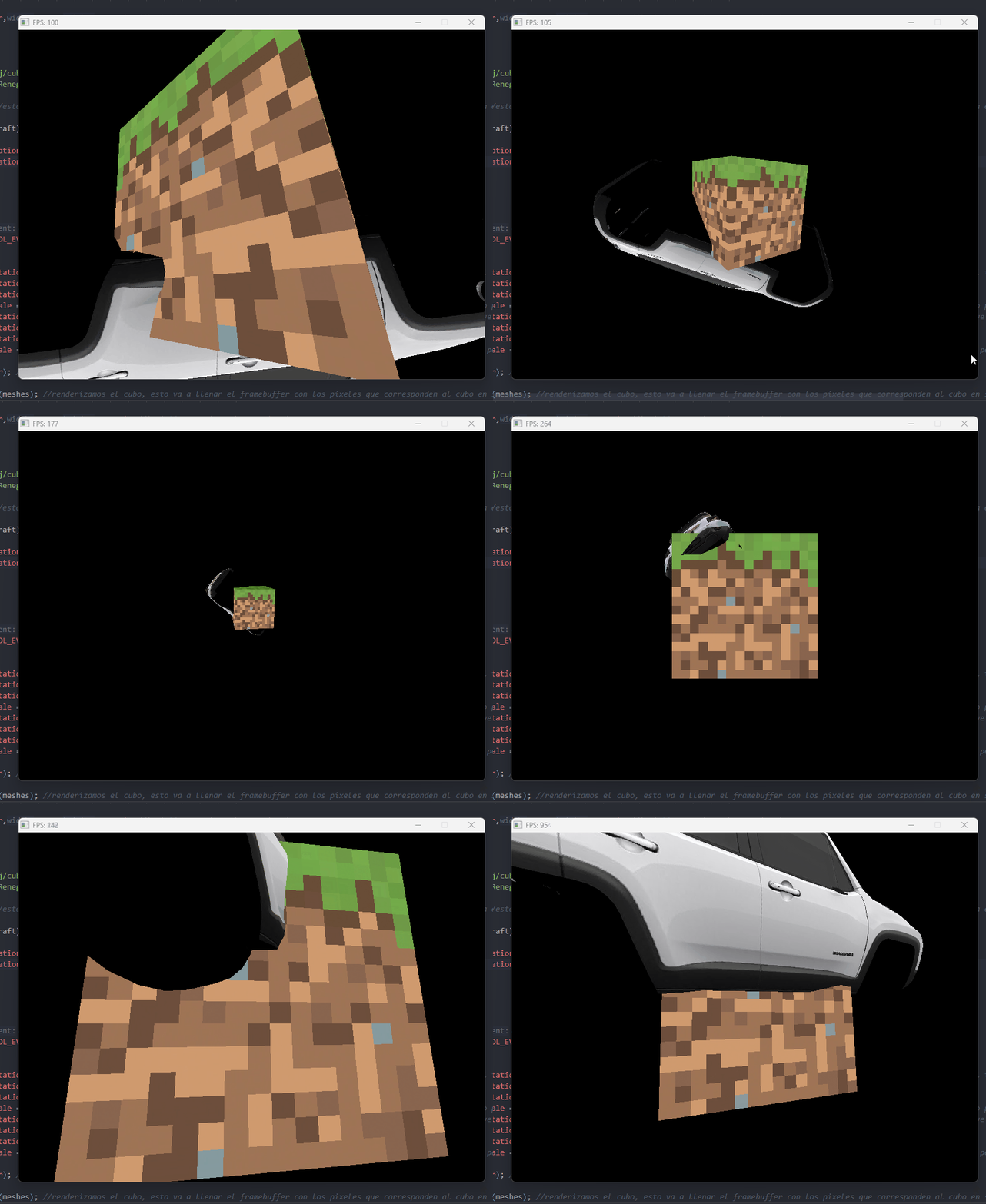
Z-buffer working correctly with multiple objects — depth ordering is now accurate.
Result
With the z-buffer working, triangles are now sorted correctly by depth. The next step is probably the most important in the entire rasterizer: the math that makes perspective possible — the MVP pipeline.